A tiny orange has been discovered in Brazil. It is named after Lula.

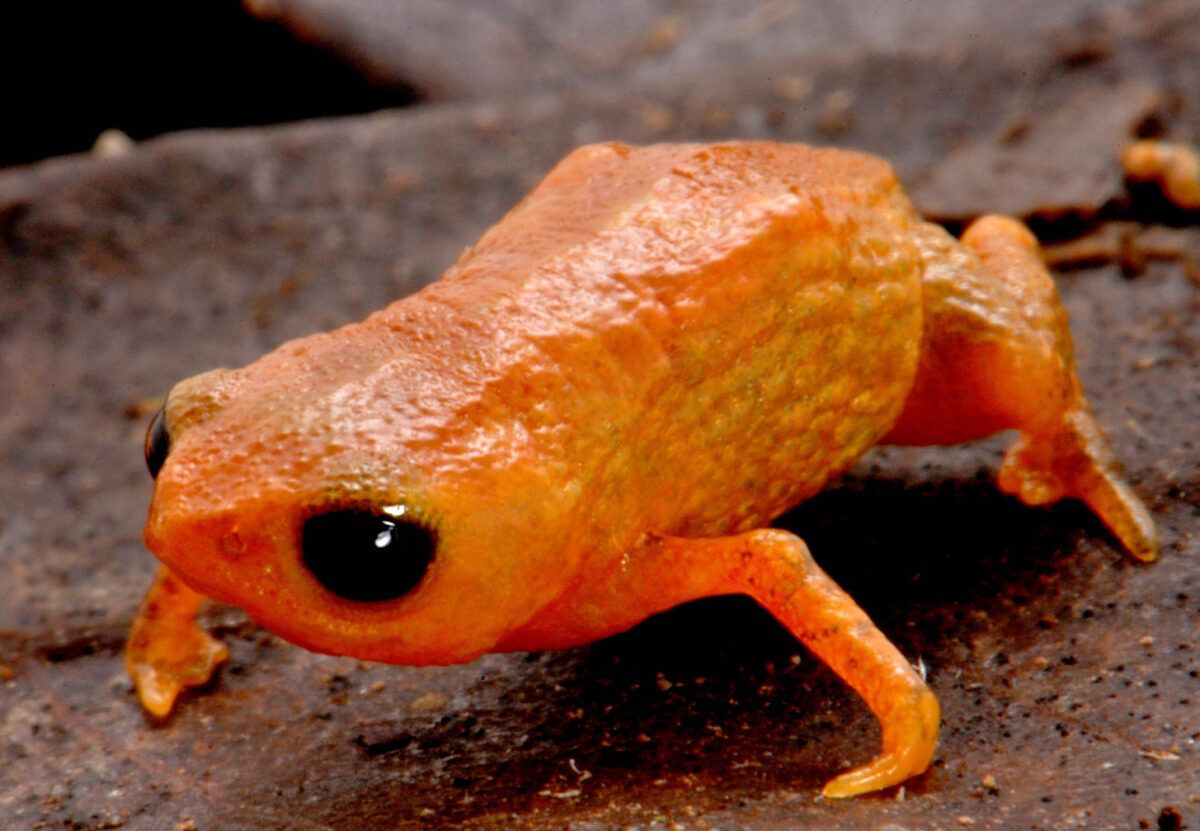
In the leaf litter of Brazil’s Atlantic Forest, scientists have added another name to a genus that seems determined to rewrite its own census. A pinky-nail-sized frog, bright orange and barely a centimeter long, has been described as a species new to science. It has been christened Brachycephalus lulai, after Brazil’s president, Luiz Inácio Lula da Silva.
The frog belongs to a group sometimes called flea toads, a lineage notable for its extremely small size and for the pace at which new species are being discovered. Of the 42 known Brachycephalus species, most have been described this century, often from single mountaintops or narrow bands of forest. The latest addition was found at two nearby sites in the Serra do Quiriri in southern Brazil, concealed among damp leaves in montane cloud forest.
Researchers confirmed its novelty by comparing DNA, body form, and its distinctive mating call with those of close relatives. Males are under 12 millimeters long; females slightly larger. For now, the species appears secure. “The new species occurs in highly preserved forests that are very difficult to access, which means it is not threatened with extinction,” Marcos R. Bornschein, one of the study’s authors, told Popular Science.
That reassurance comes with caveats. Elsewhere in the same mountain range, grassland burning, grazing, mining, and invasive pines are eroding habitats that host other, more vulnerable frogs. Climate change also could affect its niche habitat.
B. lulai underscores how incomplete scientific inventories remain, even in forests long assumed to be well mapped. In the Atlantic Forest, it turns out, there is still room for small discoveries.