Indigenous communities protect Colombia’s uncontacted peoples

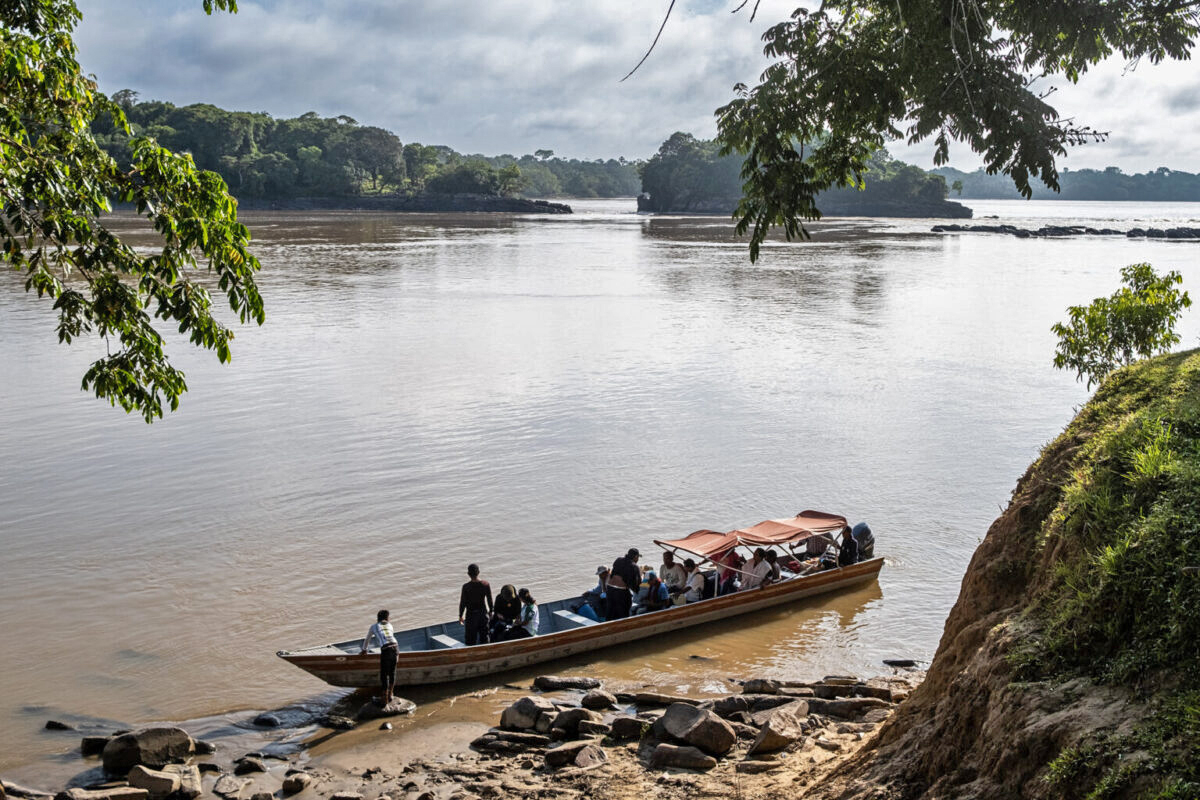
For more than a decade, two Indigenous communities deep in Colombia’s Amazon have been safeguarding those who wish to remain unseen, reports Pilar Puentes. The residents of the Curare-Los Ingleses Indigenous Reserve and the neighboring Manacaro community have built an extraordinary system of surveillance and stewardship to protect uncontacted peoples such as the Yuri and Passé—tribes that continue to live in voluntary isolation.
Their vigilance, combining ancestral wisdom and digital tools, led the government in October 2024 to formally recognize the existence of two such groups, ending a century of speculation. The decision owed much to the patient accumulation of evidence: faint footprints, scattered seeds, traces of fire. The Indigenous monitors’ efforts filled the void left by the state, which has been largely absent from this conflict-ridden region. Armed groups, illegal miners, missionaries, and traffickers now press upon the boundaries of lands that had once been untouched.
In the face of danger, women from Manacaro have stepped into roles long reserved for men, steering canoes along the rivers, collecting data, and recording threats. Their work, supported by the Amazon Conservation Team (ACT) and local associations, now spans thousands of hectares. Using GPS, georeferencing programs, and tablets, they track wildlife and human incursions, and their findings feed into national policymaking through Colombia’s Commission for the Protection of Indigenous Peoples in Isolation.
The communities’ maps are more than technical records. They are spiritual documents that intertwine geography with belief. Before every patrol, elders perform rituals at a control post named Puerto Caimán, asking for protection from the forest and permission from the unseen tribes. These ceremonies acknowledge that the act of watching is itself a relationship—one that must honor both distance and kinship.
Despite the spread of violence and mining, the network of Indigenous monitors remains the most reliable line of defense for Colombia’s uncontacted peoples. Their vigilance has not only confirmed existence, but preserved absence: the right to remain invisible. As one leader, Ezequiel Cubeo, put it, “We are uniting to protect our isolated brothers, because the territory is very large.” In a forest where the state cannot safely enter, these quiet guardians ensure that some parts of humanity may still choose to live beyond its reach.