Nigeria passes major new wildlife law

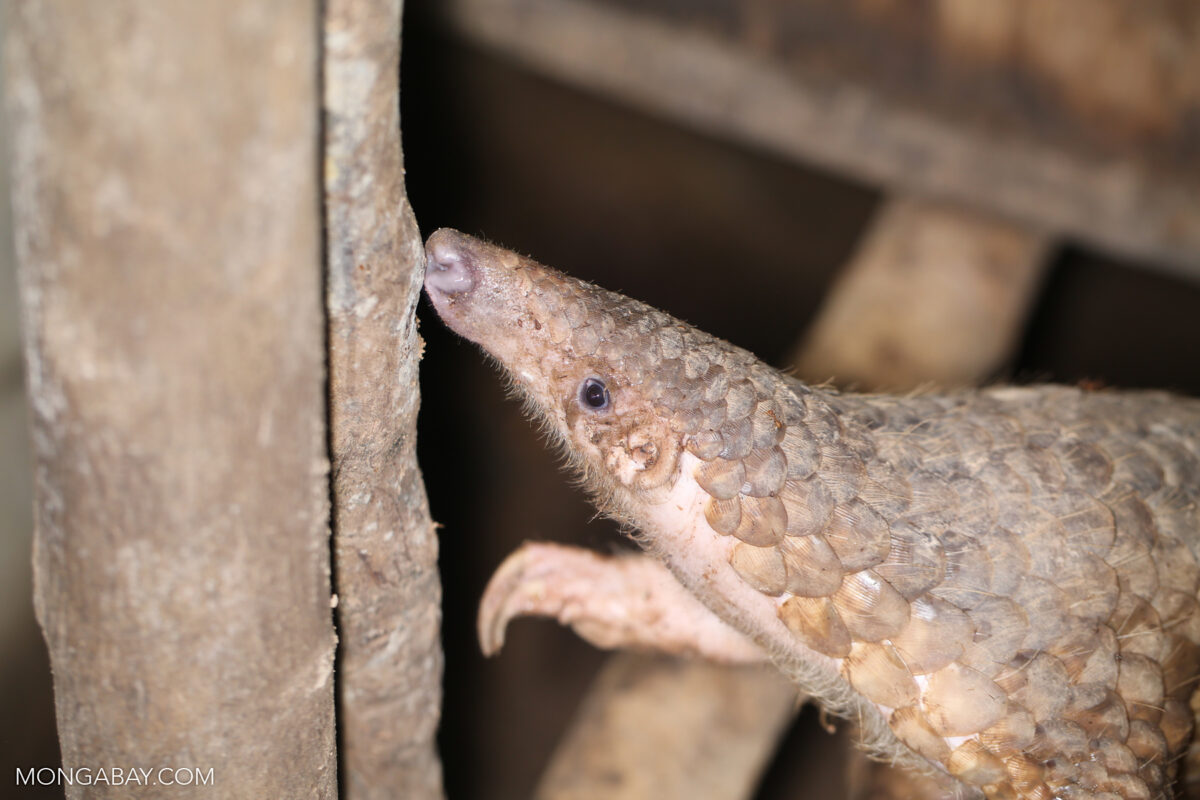
Nigeria’s Parliament has approved sweeping legislation to protect endangered species from traffickers, reports Valentine Benjamin. Once signed by the president, offenders caught trading elephant ivory, pangolin scales, or other products from threatened animals could face fines of up to 12 million naira ($8,300) and as much as ten years in prison. The law is among the toughest of its kind in West Africa. Yet even its supporters admit that laws are only as strong as their enforcement.

The Endangered Species Conservation and Protection Bill of 2024, passed by the Senate on October 28, brings Nigeria closer in line with international conservation treaties such as CITES.

“This new bill addresses long-existing gaps in our legal framework,” said Terseer Ugbor, the bill’s sponsor and deputy chairman of the House Committee on Environment. “The old law was riddled with ambiguities. It failed to specify whether its provisions applied only to international wildlife trade or also to domestic transactions.”

The new measure broadens the list of protected species, strengthens penalties, and allows courts to seize assets linked to wildlife crimes. It also gives agencies new powers to close the bureaucratic gaps traffickers have long exploited. Whether those tools will be used effectively is another matter.

Nigeria has for years been a global hub for illegal wildlife trade. Between 2010 and 2021, roughly a million pangolins—about 90,000 a year—are believed to have been trafficked through Nigerian networks. In 2024 alone, nearly 1.6 metric tons of ivory seized in Vietnam were traced back to Nigeria. Yet prosecutions remain rare; only a dozen convictions have been secured in the past three years.

“A law is useless without enforcement,” said Tunde Morakinyo of the African Nature Investors Foundation. 

Still, optimists hope that with stricter laws and coordination, Nigeria could move from being a trafficking hub to a leader in conservation.

Elephants on the edge

In northern Kenya’s Samburu National Reserve, elephants once starved and parched by drought now graze in knee-high grass. The rains that began in late 2023 transformed the landscape into a lush plain of acacia and tangled vegetation.

“These were salad days for the Samburu elephants,” writes journalist Hillary Rosner in ROAM: Wild Animals and the Race to Repair Our Fractured World, published by Patagonia. Her visit to the reserve early in 2024 captures both the beauty of recovery and the fragility of coexistence in a country racing toward modernity.

From a field camp beside the Ewaso Ng’iro River, researchers with Save the Elephants have tracked hundreds of individuals since 1997, fitting them with GPS collars that reveal “elephant highways” across northern Kenya. The data show how herds migrate in search of water and acacia seed pods, crossing communal grazing lands and private plots in intricate seasonal patterns. But those ancient corridors are fast disappearing. As Rosner observes, “by building roads and rail lines, putting towns and cities in the midst of elephant roads, and erecting fences that make it impossible for the animals to cross, humans are cutting off the elephants’ ability to move across the landscape.”

Kenya’s push to achieve middle-income status by 2030 hinges on vast infrastructure projects: railways, highways, and new towns springing up along transport routes. The Standard Gauge Railway—funded by China’s Belt and Road Initiative—has already bisected two national parks. The next wave of expressways and private land conversions threatens to wall off the remaining migration routes entirely.

Rosner’s account centers on one such bottleneck near the settlement of Oldonyiro, where GPS maps show the animals’ meandering tracks condensing into a single line—a narrow, perilous passage through encroaching development. Conservationist Benjamin Loloju, a local Samburu who earned an “elephant scholarship” from Save the Elephants, works with communities to mark and preserve corridors before they vanish. Yet even he admits, “We already think maybe we have been late for Oldonyiro.”

The elephants adapt, forging new routes where they can, but each fence and erosion gully narrows their options. Rosner’s narrative makes plain what data alone cannot: that Kenya’s test of progress is not only economic. The country’s future—and that of its elephants—depends on whether it can build prosperity without severing the ancient paths that bind the wild to the human world.

An excerpt from ROAM.

Rescued African gray parrots return to Democratic Republic of Congo’s forests

In the forests of Maniema province, fifty African gray parrots soared back into the wild this October, marking a small victory against one of Central Africa’s most persistent wildlife crimes. The birds had spent a year recovering at a sanctuary run by the Lukuru Foundation after being rescued from traffickers. Since its creation, the foundation has rehabilitated nearly 400 parrots, but much work remains, reports Didier Makal.

A new decree issued in July 2025 bans the capture, trade, and possession of African gray parrots in the Democratic Republic of Congo. Yet poaching continues. “It is good to have a ministerial decree banning poaching, but there needs to be action on the ground,” said conservationist Corneille Kalume.

The trade is brutal: only a third of captured birds survive the journey from forest to buyer. 

The Lukuru Foundation and the Congolese conservation agency have established rehabilitation centers across the country, including a new one at Kisangani Zoo. Caring for the birds is costly—feeding 100 parrots can exceed $2,000 a month—but the greater challenge lies beyond the cages. Conservationists fear that once released, the same parrots could be caught again, unless enforcement and community engagement take flight alongside them.

Scientists discover world’s 1,500th known bat species

From the slopes of a volcano on Bioko Island in Equatorial Guinea comes the 1,500th bat species known to science, reports Shreya Dasgupta.

Researchers have named it Pipistrellus etula—“etula” meaning “island” or “nation” in the Bubi language. The tiny insect-eating pipistrelle marks a symbolic milestone for mammalogy and a reminder of how much remains undiscovered. “It reminds us how much biodiversity remains undocumented, particularly in under-surveyed regions like Central Africa,” said Laura Torrent, lead author of the study.

The discovery traces back to 1989, when a handful of specimens were first caught near Bioko’s Biao Peak. Decades later, genetic analyses confirmed they represented a new species adapted to montane environments where no other vesper bats are known.

Scientists warn that logging, construction, and rising temperatures could threaten its fragile volcanic habitat—a microcosm of broader conservation challenges.

How one woman rose from porter to conservation leader

In the damp undergrowth of Cameroon’s Lobéké National Park, where forest elephants slip through the forest unheard and gorillas emerge with the dusk, one woman charts a course both personal and profound.

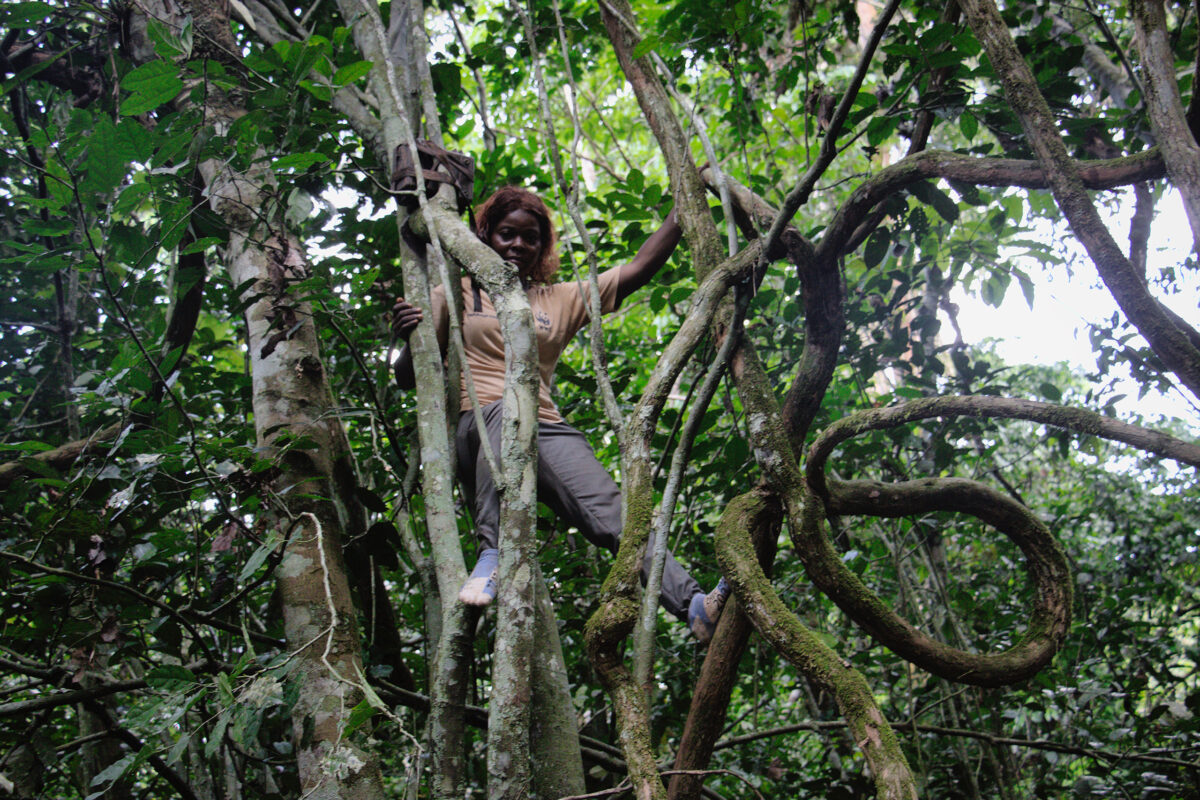
Marlyse Bebeguewa was once just a name on the roster of porters, hauling gear for others. Today, she is at the forefront of conservation in one of Central Africa’s richest but least accessible protected areas, report David Akana and Yannick Kenné.

Born in 1987 into a Bantu family, Bebeguewa was raised by her mother after her father died assisting scientists in the forest. Financial hardship forced her to leave school early. But rather than succumb to circumstance, she followed a trail—both literal and metaphorical—blazed by her father. At 18, she took a job as a porter. A year later, she trained as a guide. By 2014, when Lobéké’s management sought ecological monitoring assistants, she was the only woman selected—and promptly made team leader.

Her rise, achieved without formal education beyond secondary school, reflects the latent capacity often overlooked in local communities. It is also an implicit rebuke to a conservation model that has historically marginalized Indigenous and local actors, especially women.

Now a consultant with WWF, Bebeguewa uses acoustic sensors and camera traps to track endangered species and detect threats, merging new technology with on-the-ground knowledge. She mentors other women and works to bridge divides between Bantu and Baka communities—relationships that remain fraught in a region marked by deep inequities.

Yet the barriers she confronts are not just cultural or gendered. Lobéké remains chronically underfunded, difficult to reach, and underutilized as a tourism asset.
“We need more communication tools,” she says, referring to the basic radios shared among teams.

Still, Bebeguewa endures. Her work is both an act of remembrance and an investment in the future. She has built a home, educated her children, and dreams of a day when her descendants might take up the same cause.
“Even if I’m no longer working there someday, I hope my children or grandchildren will continue in this field.”

Conservation, for her, is not an abstract endeavor. It is daily, physical, communal.

And it begins, as hers did, with the simple act of showing up.

The Ugandan botanists climbing to save Africa’s forests

In the quest to restore Africa’s threatened forests, seed collectors are learning to ascend towering trees, sometimes over 50 meters tall, to gather the perfect seeds, reports Ruth Kamnitzer. This method is not only an art but a necessity in a world where many native tree species face extinction.

Sebastian walaita javan, curator at Tooro Botanical Gardens in Uganda, has spent over 25 years perfecting the technique of high tree climbing to collect seeds, teaching others to follow in his footsteps. In a team of three, climbers use ropes, harnesses, and spurs to scale massive trees, collecting mature seeds from the canopy before returning to the ground. The practice is integral to the African Forest Landscape Restoration Initiative (AFR100), which aims to restore 100 million hectares of land by 2030.

Native species are critical to maintaining biodiversity, but collecting their seeds is not without challenges. Walaita explains that seeds found on the ground are often too old, contaminated, or too immature to germinate. Climbing the trees is the only way to access the healthiest seeds at the right time—seeds that could hold the key to preserving endangered species. Yet, many local botanists struggle to reach high branches without proper training or equipment.

In September 2024, Walaita took his skills to Côte d’Ivoire, where he trained Ivorian botanists on how to safely harvest seeds from tall trees for reforestation efforts, focusing on native species. This is part of a wider movement to shift from planting non-native species like teak to those that are indigenous, more suited to the local ecosystem, and crucial for long-term restoration.

As reforestation efforts grow, so does the need for safe, sustainable ways to collect seeds and promote biodiversity. With the right training the next generation of tree climbers may have the tools to restore the forests that sustain Africa’s wildlife and people.