Indonesia’s first attempt to move a Javan rhino ended in failure.

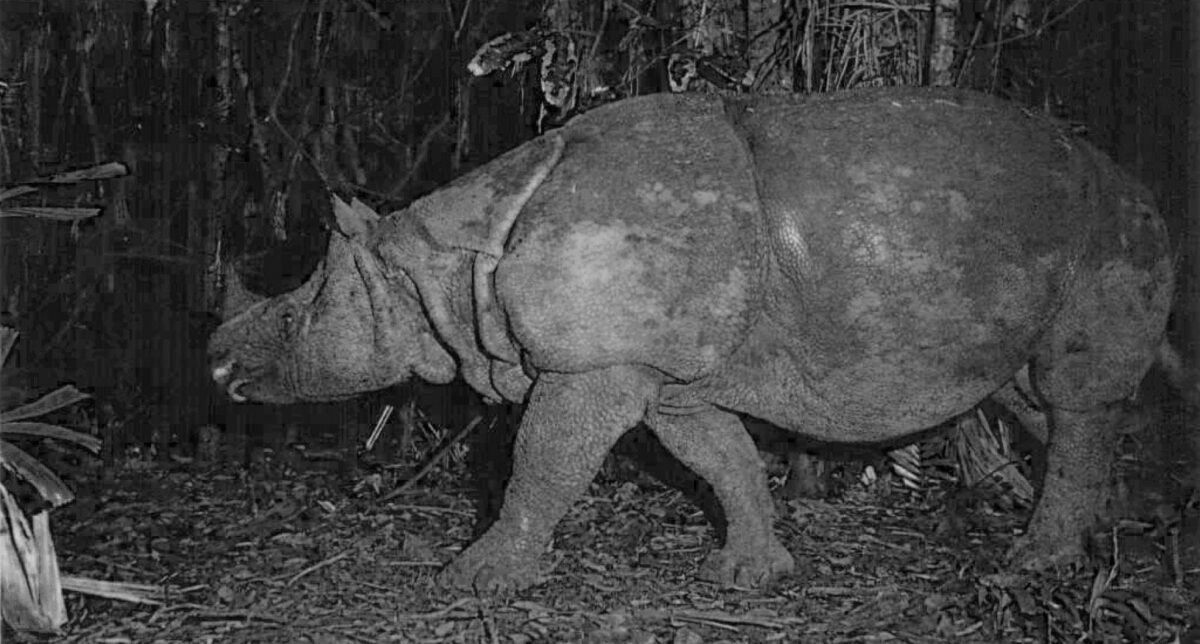
Musofa, a mature male captured in early November as part of a long-planned genetic-management effort, died four days after arriving at the Javan Rhino Study and Conservation Area. Park officials said he received round-the-clock veterinary care. A necropsy later showed he had been living with severe parasitic disease, chronic malnutrition and age-related organ decline. Those conditions would have been difficult to detect in the field. They also made him far less able to withstand the stress of capture and transport.
Experts have asked why his condition deteriorated so quickly. John Payne, a veteran rhino conservationist, told Mongabay’s Basten Gokkon that animals with heavy parasite loads can often cope in familiar surroundings, but that in Musofa’s case, the strain appears to have overwhelmed whatever reserves he had left.
For a species pushed to the brink by poaching and hemmed into a single park, the loss is more than symbolic. Yet the response has not been paralysis. Officials say the failure will sharpen disease screening, surveillance and planning. Conservationists insist the work must continue. They have brought the Javan rhino back before, and they say it can be done again.