Camera traps and Indigenous knowledge help confirm presence of ‘lost’ echidna species

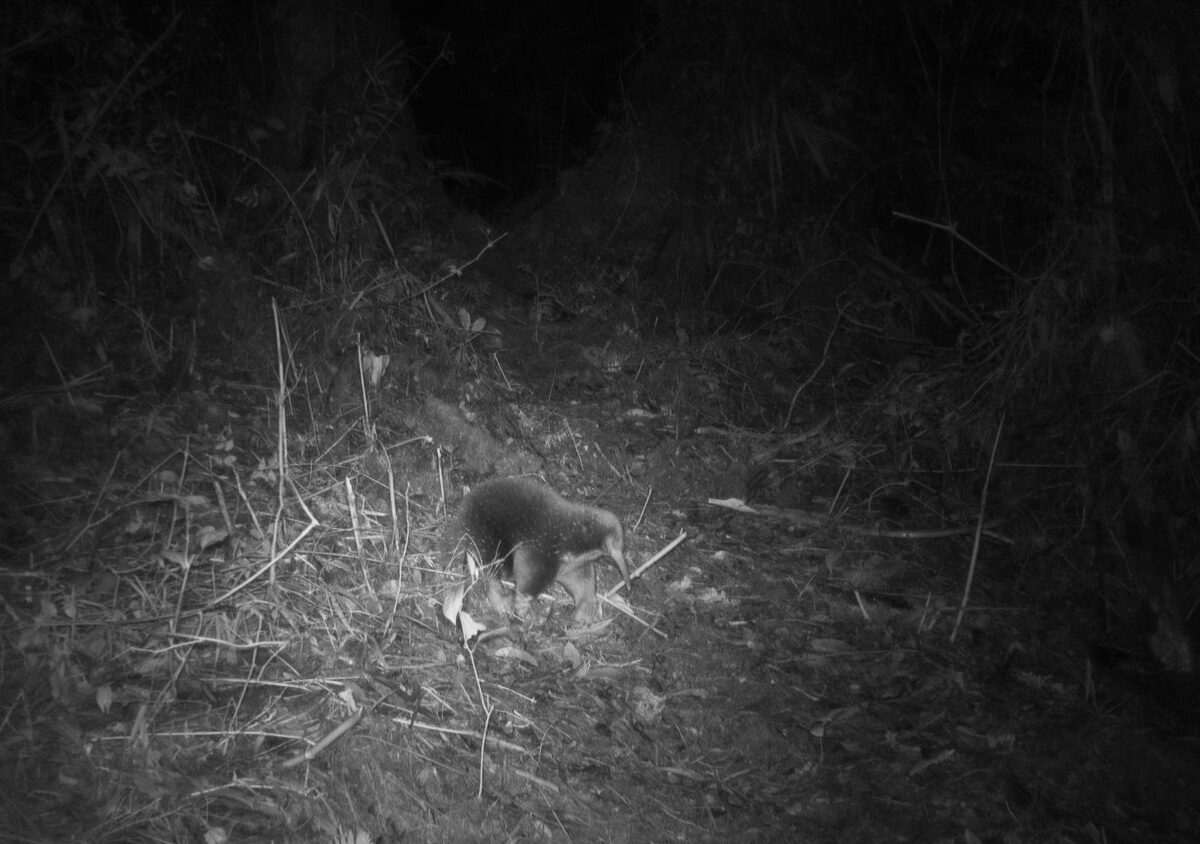
Thought extinct for over six decades, Attenborough’s long-beaked echidna—a spiny, egg-laying mammal known locally as payangko—has made a dramatic return to science.
Captured on camera traps deployed between 2022 and 2023 in Indonesia’s Cyclops Mountains on the island of New Guinea, the elusive monotreme was last scientifically documented in 1961, when a lone specimen was collected.
A recent study confirms the findings, which stemmed from a collaboration between researchers, Indigenous communities, and local agencies, reports Kristine Sabillo Guerrero.
Named after the famed naturalist David Attenborough, Zaglossus attenboroughi is one of five extant monotreme species and is listed as critically endangered. The new evidence—110 photographs and 15 videos—includes signs of possible courtship behavior, a promising signal for its continued survival.
“Encouraging evidence that the population is breeding,” noted co-author James Kempton of the University of Oxford.
The study underscores the central role of Indigenous knowledge in the discovery.
“We would not have succeeded without their support and input,” said Malcolm Kobak of YAPPENDA, a local NGO.
With funding and research limited in Indonesian New Guinea, the authors hope this rediscovery spurs conservation action—and a deeper recognition of the value of local stewardship and knowledge.