Nigeria passes major new wildlife law

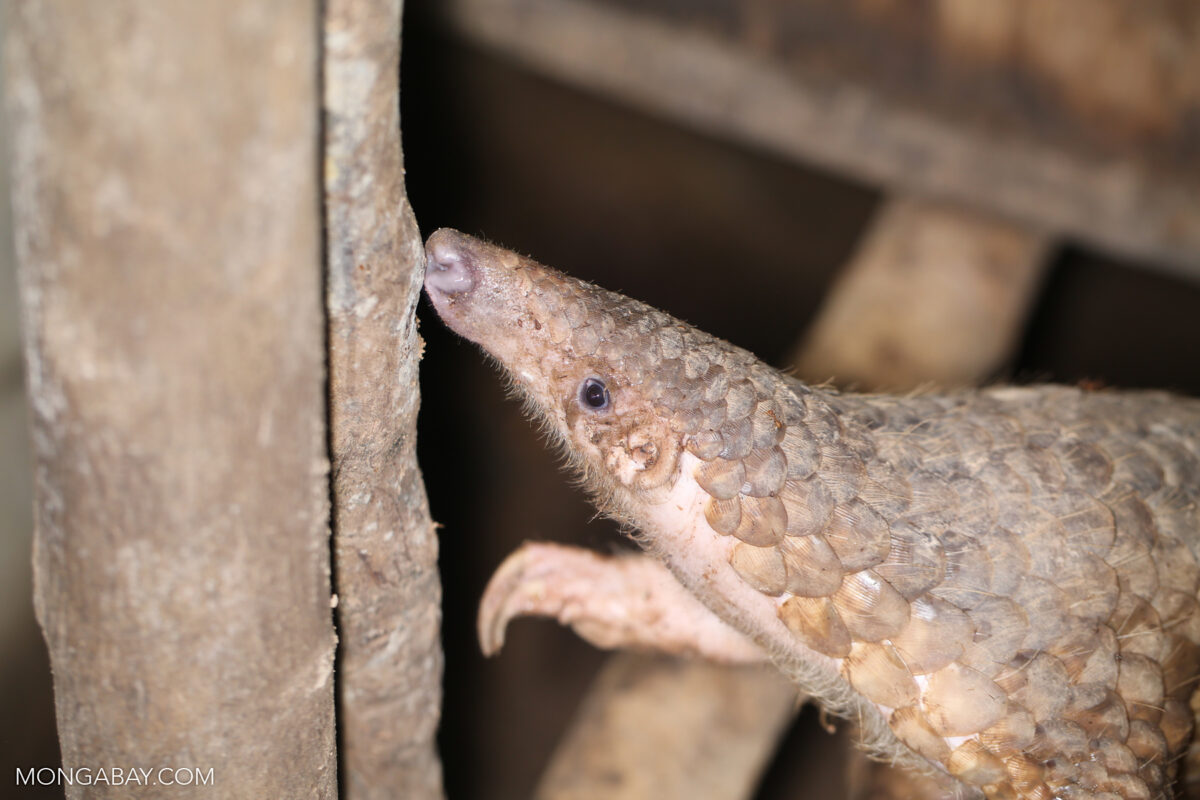
Nigeria’s Parliament has approved sweeping legislation to protect endangered species from traffickers, reports Valentine Benjamin. Once signed by the president, offenders caught trading elephant ivory, pangolin scales, or other products from threatened animals could face fines of up to 12 million naira ($8,300) and as much as ten years in prison. The law is among the toughest of its kind in West Africa. Yet even its supporters admit that laws are only as strong as their enforcement.

The Endangered Species Conservation and Protection Bill of 2024, passed by the Senate on October 28, brings Nigeria closer in line with international conservation treaties such as CITES.

“This new bill addresses long-existing gaps in our legal framework,” said Terseer Ugbor, the bill’s sponsor and deputy chairman of the House Committee on Environment. “The old law was riddled with ambiguities. It failed to specify whether its provisions applied only to international wildlife trade or also to domestic transactions.”

The new measure broadens the list of protected species, strengthens penalties, and allows courts to seize assets linked to wildlife crimes. It also gives agencies new powers to close the bureaucratic gaps traffickers have long exploited. Whether those tools will be used effectively is another matter.

Nigeria has for years been a global hub for illegal wildlife trade. Between 2010 and 2021, roughly a million pangolins—about 90,000 a year—are believed to have been trafficked through Nigerian networks. In 2024 alone, nearly 1.6 metric tons of ivory seized in Vietnam were traced back to Nigeria. Yet prosecutions remain rare; only a dozen convictions have been secured in the past three years.

“A law is useless without enforcement,” said Tunde Morakinyo of the African Nature Investors Foundation. 

Still, optimists hope that with stricter laws and coordination, Nigeria could move from being a trafficking hub to a leader in conservation.

Bangladesh to reintroduce captive elephants to the wild

Bangladesh has embarked on an ambitious plan to end the centuries-old practice of keeping elephants in captivity, reports Abu Siddique.

The government has begun retrieving privately owned elephants and aims to rehabilitate them in the wild. The initiative follows a 2024 High Court order banning cruelty to wildlife and illegal use of animals for labor or entertainment.

The country’s elephant population is small and fragile. According to a government report, only 268 wild elephants remain in Bangladesh’s southeastern forests, alongside 96 in captivity. Once used for logging and transport, captive elephants are now illegally exploited in markets and towns, often in harsh conditions that have led to deaths from heatstroke.

The project will survey elephant populations, buy animals from owners, and prepare forest sites for rewilding. Two potential sanctuaries—Rema-Kalenga and Chunati—are under review. Officials acknowledge the difficulties ahead, from disease risks to the loss of wild instincts among long-domesticated elephants. Yet they insist that ending captivity is essential for both welfare and conservation. As one adviser put it, “the elephants will never be back in captivity.” 

If successful, Bangladesh’s experiment could become a model for other Asian nations struggling to reconcile tradition with the ethics of conservation.

Rare photos capture fishing cat preying on monitor lizard

In the mangrove swamps of the Sundarbans, a small predator has revealed unexpected prowess.

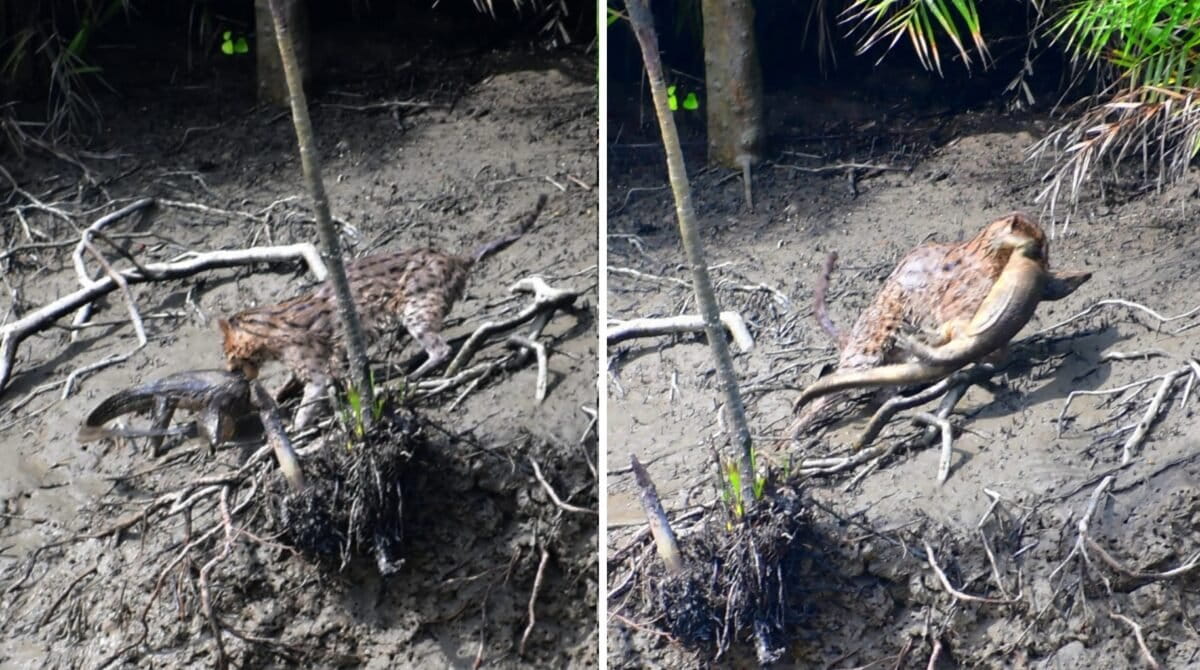
In July, naturalist Soumyadip Santra photographed a fishing cat (Prionailurus viverrinus) leaping onto an adult monitor lizard and dragging it away. The sequence, corroborated by another photographer on the scene, is thought to be the first evidence of such a kill, reports Nabarun Guha for Mongabay India.

Fishing cats, the state animal of West Bengal and listed as vulnerable on the IUCN Red List, usually dine on fish, rodents, snakes, and small birds. A monitor lizard, nearly the same size as the cat itself, is far from routine prey.

“This is a great find,” said biologist Tiasa Adhya, who has studied the species extensively. She likened the event to jaguars in South America catching caimans, a demonstration of wetland predators turning their skill against formidable rivals.

Other ecologists called the encounter “a very uncommon incident.” Food scarcity in the Sundarbans and competition with otters may have pushed the cat into riskier hunting.

Opportunism is no anomaly in nature, but this rare documentation underscores how much remains to be discovered about animal behavior.

Videos capture an unlikely alliance between ocelots and opossums in the Amazon

In the Peruvian Amazon, a series of curious encounters has left biologists scratching their heads. Camera traps have captured an unexpected partnership: solitary, nocturnal ocelots (Leopardus pardalis) strolling alongside common opossums (Didelphis marsupialis). Not once, but four times, in distinct locations over several years, the feline predator and its potential prey were seen moving together—sometimes even returning along the same path minutes later, still in tandem. The opossum, far from appearing alarmed, showed no signs of distress.

This behavior is not only puzzling; it is without precedent. Associations between solitary carnivores and omnivores—especially those that occasionally dine on one another—are vanishingly rare. Yet further evidence suggests this pairing is more than happenstance. In field experiments, opossums showed a distinct preference for the scent of ocelots over that of pumas or neutral controls. They lingered, sniffed, and rubbed themselves against the ocelot-scented fabrics, as though seeking some form of chemical communion.

Why cozy up to a cat that might eat you? The researchers suggest two possibilities: improved foraging efficiency or olfactory camouflage. Opossums may benefit from the ocelot’s hunting prowess, while the ocelot may gain from masking its scent with the opossum’s pungency. There is precedent in the animal kingdom: coyotes and badgers have been known to hunt cooperatively, trumpetfish hide behind larger fish to ambush prey, and some marsupials resist snake venom—knowledge the ocelot may intuitively exploit.

Whether this is mutualism, manipulation, or mere curiosity remains unknown. But the discovery is a reminder of how little is understood about rainforest dynamics. Even in well-trodden ecosystems, the wild has secrets yet to reveal—one cautious step at a time.

CITATION: Ettore Camerlenghi et al (2025). Beyond predator and prey: First evidence of an association between ocelot and opossum individuals. Ecosphere. https://doi.org/10.1002/ecs2.70322