A rare bloom transforms Sri Lanka’s highlands, turning its hills violet

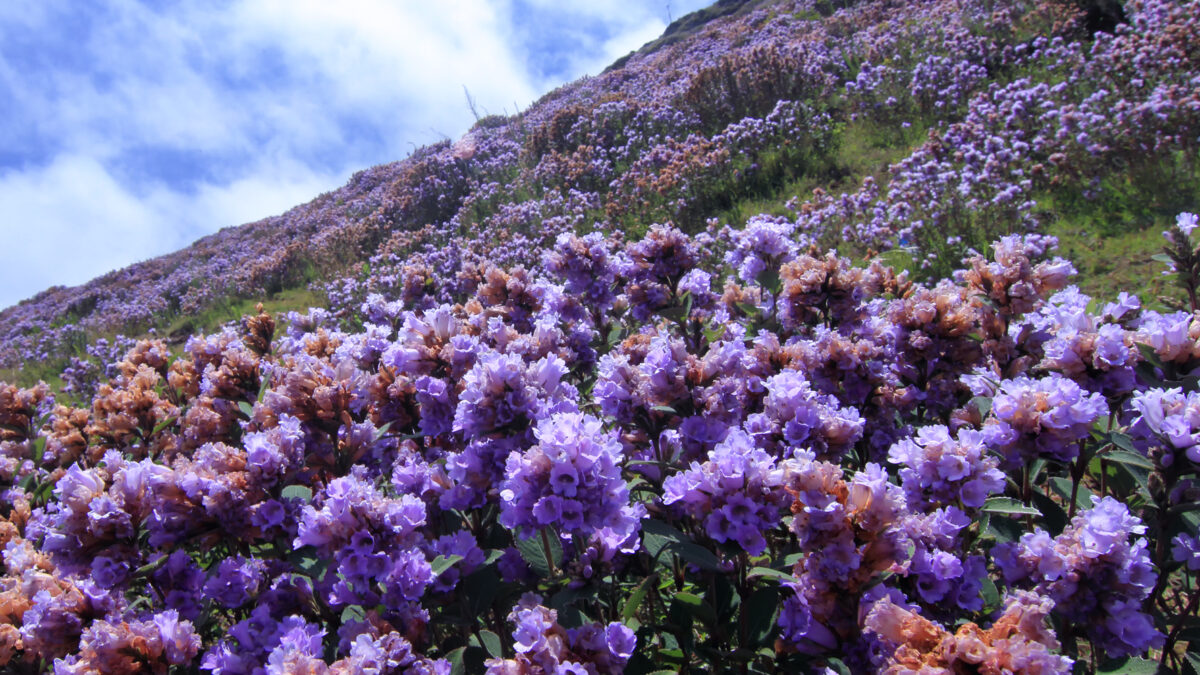
Every dozen years or so, Sri Lanka’s misty highlands erupt into a fleeting spectacle of color. Across the Horton Plains, slopes shimmer in violet, pink and white as native shrubs known collectively as nelu bloom in unison. Belonging to the genus Strobilanthes, these plants flower together, set seed and die, transforming the grasslands into a living mosaic before fading away. The synchronized flowering, a marvel of ecological timing, remains only partly understood, reports Malaka Rodrigo.
Researchers say the nelu’s mass blooming is an evolutionary gamble. By releasing enormous quantities of seed at once, the plants overwhelm predators such as rodents and insects, increasing the odds that some seeds will germinate, said Siril Wijesundara of Sri Lanka’s National Institute of Fundamental Studies. The bloom also draws pollinators, particularly giant honeybees that migrate from the coast to the hills each year, perfectly timed to the floral feast.
The phenomenon has fascinated scientists for more than a century. British naturalist Thomas Farr first documented the 12-year cycle in the late 1800s, predicting future blooms with uncanny accuracy. Botanists forecasted the latest event for 2024-25, and the hills have again proved them right.
Yet beauty brings burden. Visitor numbers to Horton Plains have tripled during the bloom, leaving trails eroded, shrubs trampled and litter scattered across fragile habitats. Park officials have urged restraint, fearing that invasive plants like mistflower and blue stars could colonize spaces left bare after the nelu die-off.
Ecologists warn that climate change may disrupt the subtle cues that synchronize the plants. Protecting the nelu’s rhythm, they say, will require more than admiration: it will demand careful management to ensure the hills turn violet again a dozen years from now.