Regenerative fashion initiative in Indonesia wins 2025 Pritzker Environmental Genius Award

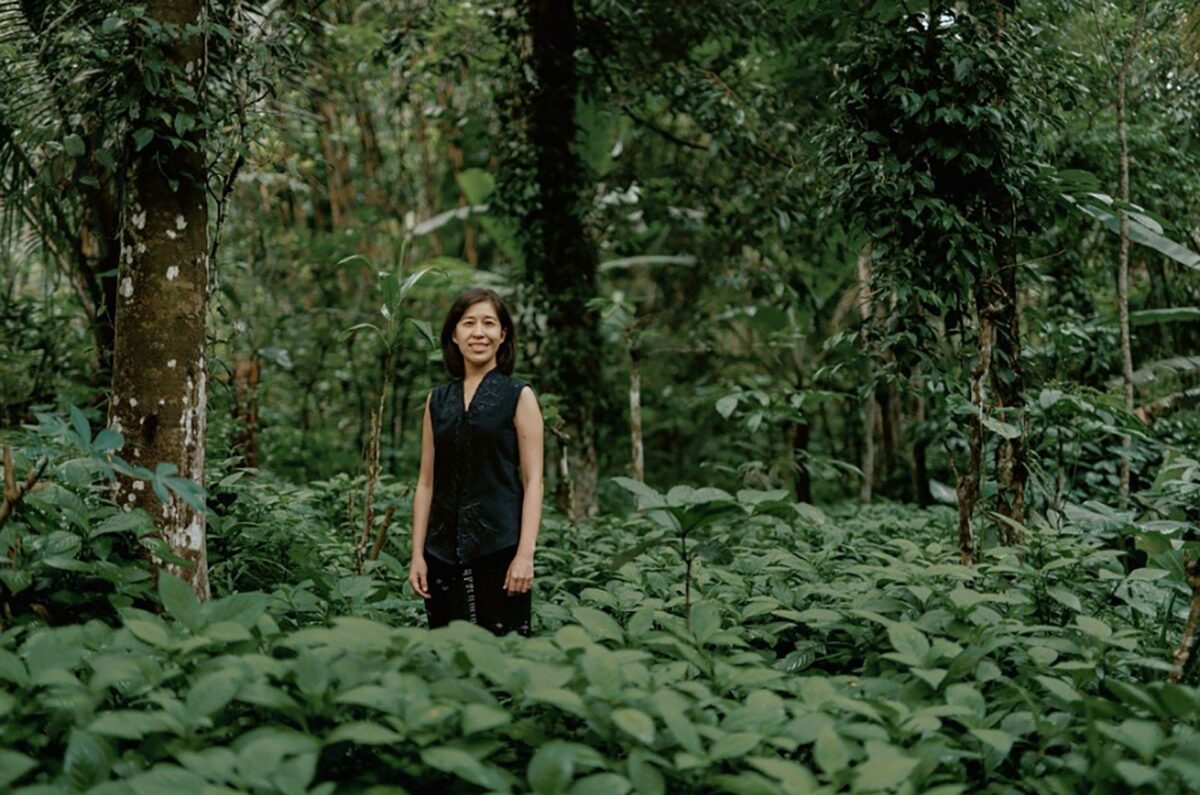
In a world defined by extraction, Denica Riadini-Flesch is showing that creation can heal instead. The Indonesian economist-turned-entrepreneur has won UCLA’s 2025 Pritzker Emerging Environmental Genius Award for building a “farm-to-closet” supply chain—a system that regenerates land, restores heritage craft, and empowers rural women.
Riadini-Flesch founded SukkhaCitta after witnessing the hidden cost of modern progress. As a young economist from Jakarta, she once equated development with endless growth—until she met women dyeing textiles with chemicals that scarred their skin and lungs. “It burns my hands, my eyes, my lungs,” one told her. The remark revealed what Riadini-Flesch calls “the true cost of convenience.”
SukkhaCitta set out to invert that logic. Production takes place not in factories but in courtyards and small farms across Java, Bali, Flores, and West Timor. Cotton is grown in polycultures that replenish soil; dyes come from indigo and mahogany leaves; fabrics are woven on handlooms. The enterprise has restored 120 acres of degraded land, kept five million liters of toxic dye wastewater out of rivers, and raised women’s incomes by 60 percent.
The environmental gains are measurable, but the social ones may matter more. Through decentralized Rumah SukkhaCitta Foundation schools, women learn ecological literacy and entrepreneurship alongside heritage techniques. “Artisans and farmers are the missing link to solving the climate crisis,” Riadini-Flesch said. “When rural artisans lead, we lay the blueprint for a regenerative future.”
Her husband and co-founder, Bertram F., accepted the award in Los Angeles; Riadini-Flesch, seven months pregnant, joined remotely from Indonesia. He described the Indigenous practice of tumpang sari—a polyculture where cotton grows beside twenty other crops—as the model for their business. “We’ve made a business case for regeneration,” he said. “It shows you can run a supply chain that restores the environment instead of depleting it.”
Her aim is to regenerate 2.5 million acres of land and create livelihoods for 10,000 women by 2050. “We cannot have infinite growth on a finite planet,” she said. “I believe in an economy where growth is measured by how well we repair what’s been broken: soil, rivers, dignity, trust.”
Anthony Waddle, who is working to protect amphibians in the wild from chytrid, and Seema Lokhandwala, who uses bioacoustics to reduce human-elephant conflict, were the other finalists.