Indonesia’s idle land problem

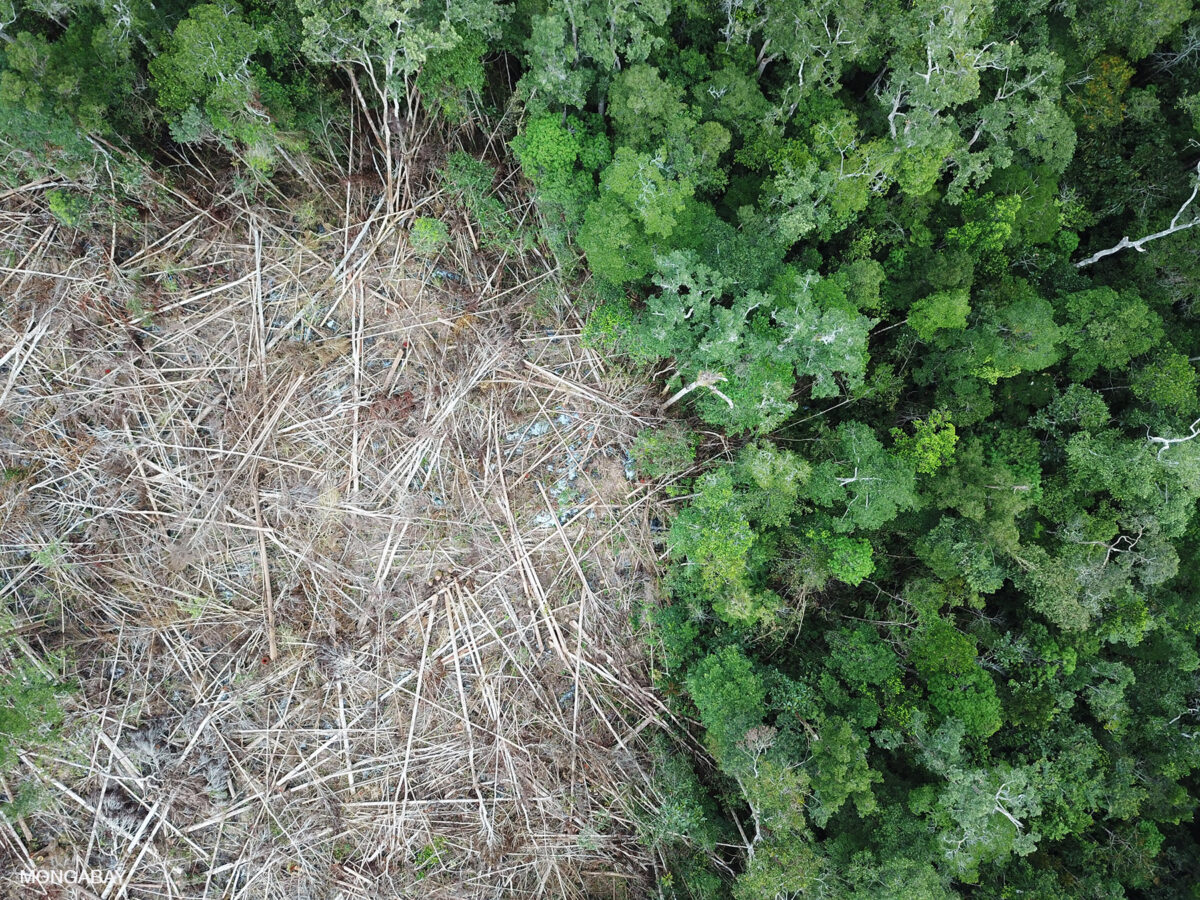
Indonesia is defying the global trend in tropical deforestation. While forest loss in much of the tropics reached record highs in 2024, Indonesia’s rate fell by 14% compared with the previous year. Yet beneath this apparent success lies an inconvenient truth: Almost half of the deforestation recorded cannot be traced to a clear cause, reports Hans Nicholas Jong.
According to TheTreeMap, a technology consultancy that monitors forest change, logging accounted for 18% of primary forest loss in 2024, industrial oil palm for 13%, pulpwood plantations for 6%, mining for 5%, food-estate projects for 3%, and fires for just over 2%. Together these explain less than half of the total. The remainder falls into a shadow zone — forest that is cleared but remains unused, often for years.
Why is this the case?
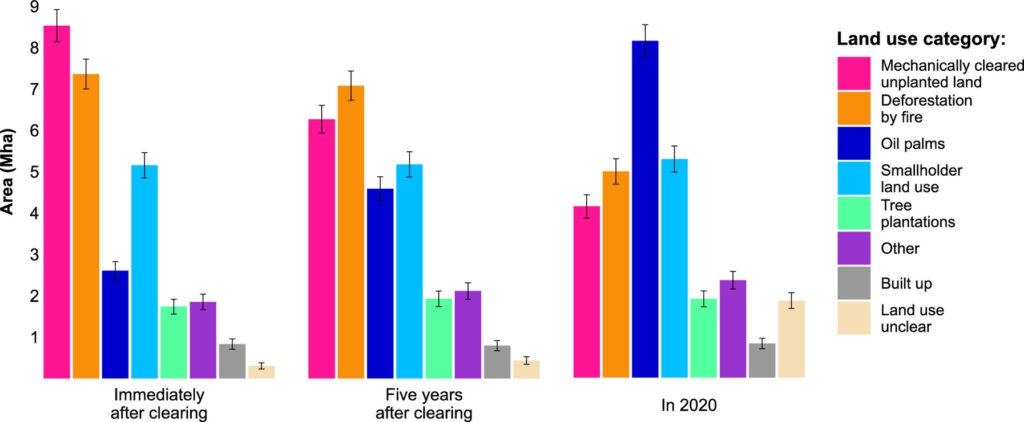
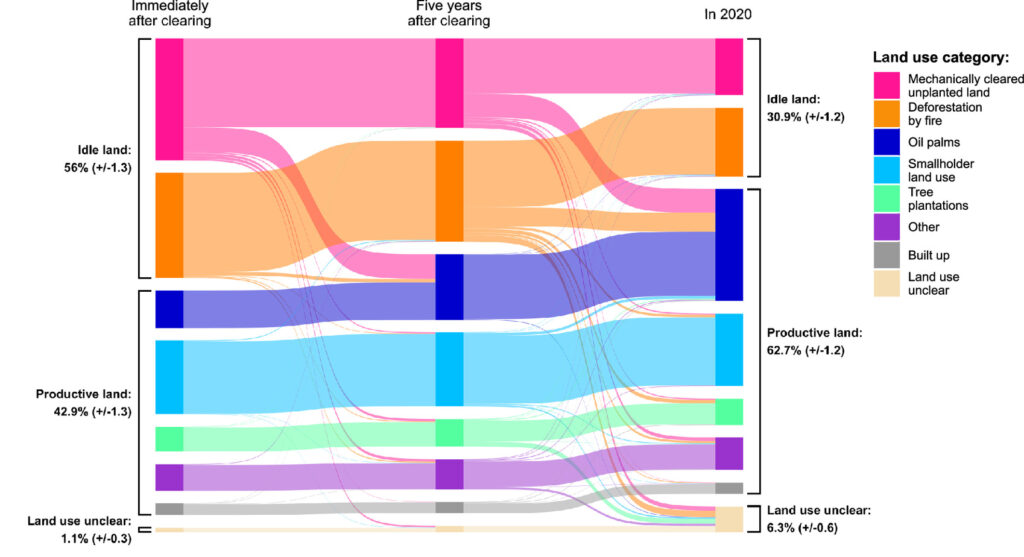
A study published in the Proceedings of the National Academy of Sciences found that nearly half of deforested land in Indonesia lies idle for at least five years before being converted, usually to agriculture. In Riau and Bengkulu, natural forests within selective logging concessions have been stripped and then abandoned, only for oil-palm investors to arrive years later.
Environmentalists see this as a symptom of weak governance. Permits are issued liberally; concession holders face few penalties for clearing and walking away. Boy Jerry Even Sembiring of Walhi calls it the result of “reckless issuance of permits.” The pattern is not new: since the 1990s, firms have cleared land, extracted timber, and left the rest as part of speculative land-banking strategies.
The government has begun to respond. This year the Ministry of Forestry revoked 18 inactive concessions covering 526,000 hectares. Minister Raja Juli Antoni described the move as a step toward reclaiming unproductive lands. But critics say the problem is far larger.
Solutions exist. Mapping idle lands and clarifying ownership could pave the way for rehabilitation or community management. Advocates propose expanding Indonesia’s social-forestry program, which grants local communities rights to manage state forest. Properly targeted, it could boost rural incomes, bolster food security, and reduce the risk of fires — a common hazard on abandoned land.
Yet the politics of land in Indonesia are fraught. Sixty-eight percent of the country’s land is controlled by just 1% of its population. Between 2015 and 2024, over 3,200 agrarian conflicts erupted, affecting 1.8 million households. Using idle land as a pretext to expand industrial agriculture, warns Auriga Nusantara’s Timer Manurung, risks deepening these disputes.
Indonesia’s declining deforestation rate may be encouraging. But unless the country tackles the murky drivers of idle land, today’s progress could mask tomorrow’s problems.